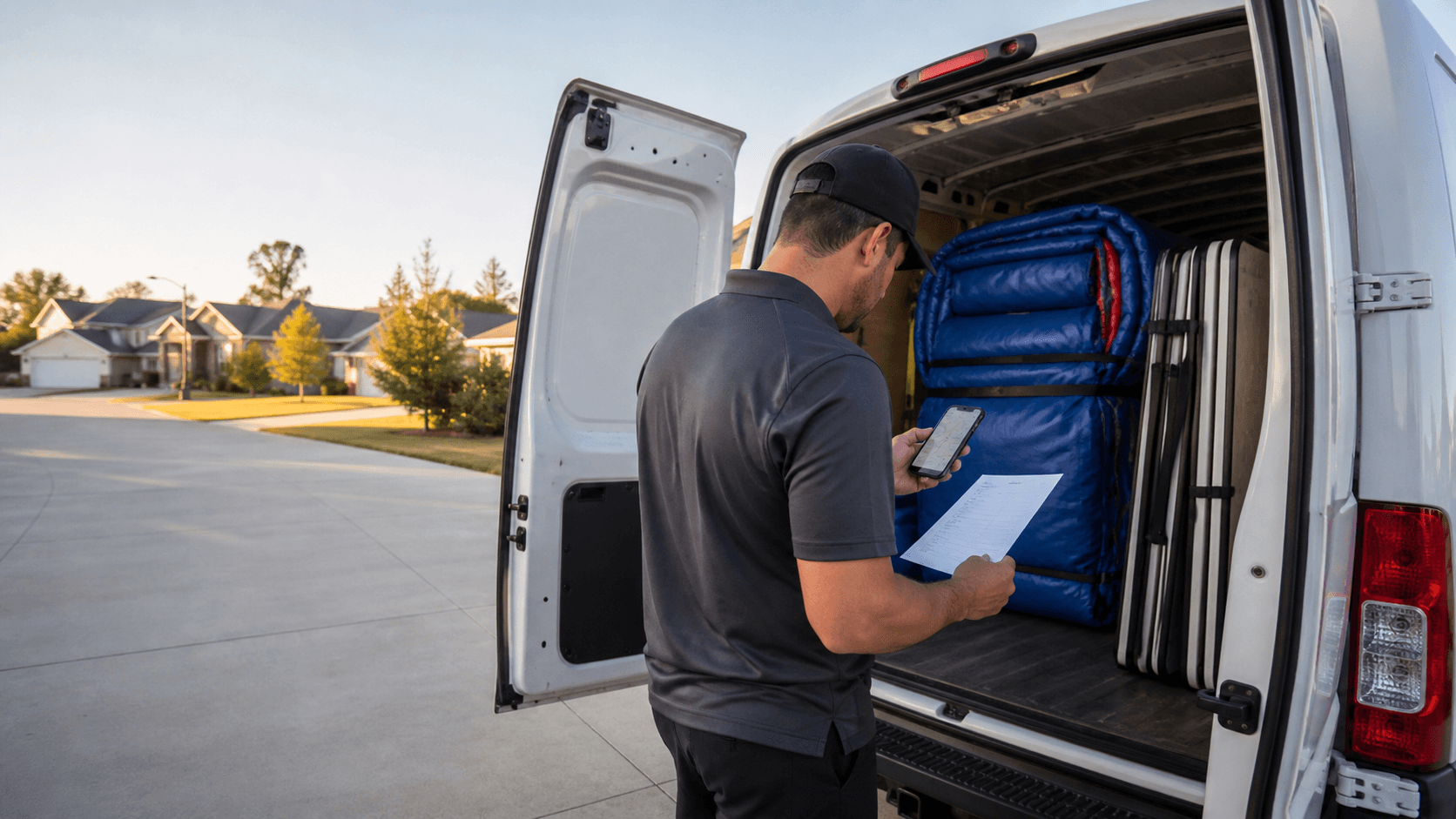
A Saturday delivery route can look easy on a calendar and still become expensive once loading order, customer windows, setup time, traffic, and pickup commitments collide. Party rental operators do not need a generic delivery route: they need a plan that protects the first setup, keeps equipment with the right truck, and leaves enough margin for the unexpected.
1. Start with the commitments that cannot move
List every delivery, setup, pickup, and customer appointment window before thinking about the shortest route. A school, park, venue, gated neighborhood, or event with a fixed start time may need to happen first even if it is not geographically closest. Mark any stop that requires a delivery permit, a specific contact, an attendant, stairs, a long carry, or a special vehicle.
2. Build the truck around the route, not the other way around
Load the gear for the first time-sensitive setup where it can be reached safely. Keep blowers, extension cords, stakes or sandbags, table carts, and other support equipment with the unit that needs them. Confirm capacity and weight limits before deciding that one vehicle can cover every stop. A route is only useful if the crew can unload it without reshuffling half the truck.
3. Use real addresses and leave service-time margin
Use full street addresses, not neighborhood names or customer descriptions. Add realistic time for parking, unloading, setup, walkthroughs, traffic, and the time needed to answer a customer question. The best order on a map is not automatically the best operational route if it creates a late first setup or sends the crew into a venue before access is available.
4. Put the stops in a sensible order
Once fixed appointment windows are protected, group nearby stops and reduce backtracking. The free party-rental route planner can organize up to 10 delivery addresses from a warehouse or current location and open the result in Google Maps. Review the suggested order against delivery windows and equipment needs before sending the crew out.
5. Plan pickups before the first truck leaves
Pickups can become the part of the day that causes overtime. Note which rentals end early, which venues have a hard closing time, and which items can stay overnight only with a confirmed arrangement. If one crew is handling both setup and pickup, make sure the delivery route does not consume the pickup buffer.
6. Give customers a clear arrival plan
Before departure, confirm the customer contact, gate instructions, setup surface, power or water requirements when applicable, and the person who can approve placement. A two-minute confirmation can prevent a long wait at the curb and protect the next delivery window.
A simple morning checklist
- Confirm fixed arrival windows and the first setup.
- Use complete addresses and a known warehouse or starting point.
- Load time-sensitive equipment for safe, direct access.
- Check traffic, vehicle restrictions, and venue access.
- Leave a buffer between stops.
- Review pickup commitments before leaving the warehouse.
- Share the final route and customer contacts with the crew.
Turn better routes into a steadier booking workflow
The route planner is free for any operator. Vendors approved for the Bouncehouse360 marketplace can also receive local booking opportunities and see upcoming bookings in their workflow. You keep operating your own business; the marketplace gives customers another way to find and book local inventory.
Route order is an estimate. Confirm traffic, vehicle restrictions, appointment windows, safe loading requirements, and local rules before driving.
Free operator tool
Plan your party rental delivery route
Paste up to 10 delivery addresses, put the stops in a smarter order, and open the finished route in Google Maps. No vendor account is required.
Use the free route planner